


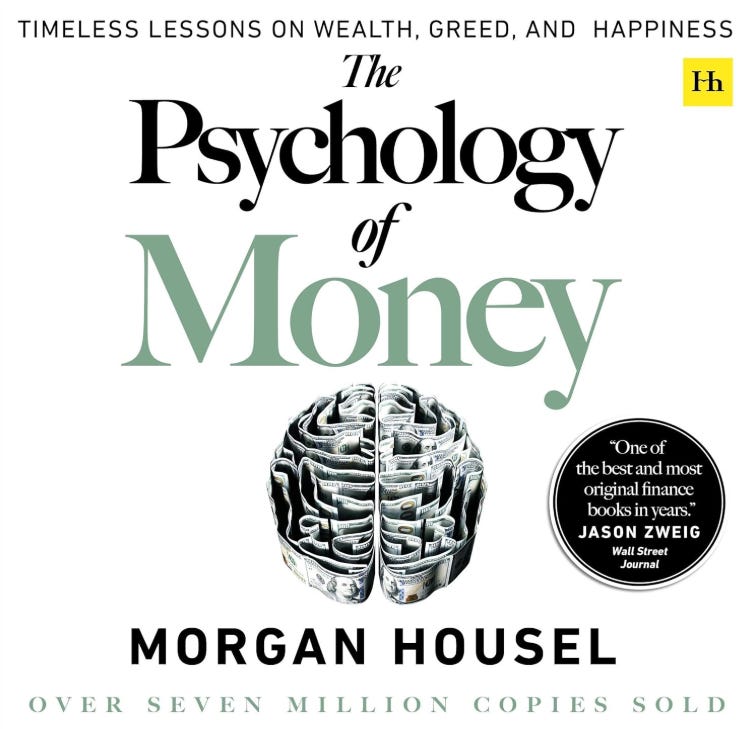
Forget complicated investment strategies and get-rich-quick schemes. “The Psychology of Money” isn’t another finance book telling you to cut back on coffee or invest in this week’s hot stock. Housel does something more valuable – he shows you why you think about money the way you do.
Why “The Psychology of Money” Hits Different:
- Written in straightforward stories, not confusing jargon
- Focuses on behavior and mindset, not just tactics
- Acknowledges that personal finance is more personal than finance
- Treats you like a human, not a spreadsheet
Core Truth Bombs From “The Psychology of Money”:
- Financial success comes from behavior, not just knowledge
- Your personal history shapes your money beliefs more than facts
- Wealth isn’t about what you earn – it’s about what you keep
- Getting money and keeping money require completely different skills
Who Needs “The Psychology of Money”:
- Guys who know the “right” money moves but still feel anxious
- Men tired of financial advice that ignores real life
- Anyone who’s ever wondered why money decisions feel so emotional
- Brothers ready to break inherited money patterns
Best Quote to Drop at Work:
“Doing well with money has little to do with how smart you are and a lot to do with how you behave.”
The Real Talk:
Housel doesn’t pretend money is just math. He shows how your unique history, personality, and values shape every financial decision you make – often without you realizing it. Instead of fighting those forces, this book teaches you to work with them.
Why It Matters Now:
In uncertain economic times, the real edge isn’t having perfect information (nobody does). It’s understanding your own financial psychology well enough to stay the course when emotions tell you to panic.
Action Steps After Reading “The Psychology of Money”:
- Write your money story – how your upbringing shaped your views
- Identify your true financial goals (not the ones you think you should have)
- Build simple systems that work with your psychology, not against it
- Focus on reasonable financial behaviors you can sustain for decades
Bottom Line:
You don’t need another book of hot investment tips. You need a guide to your own financial psychology. This is that guide – no judgment, no prescriptions, just clarity.
Remember:
The best financial plan isn’t the mathematically optimal one. It’s the one you’ll actually stick with.